In what was perhaps the most politically charged artistic action ever to take place at the Tate Modern, yesterday a group of artists demonstrated against using public institutions to legitimize the business of fossil fuel industries such as BP. Should the Tate behave as a pawn to the highest bidder? Its ‘neutral’ stance conceals the privileges gained by those corporations with the cash to invest (no matter what kind of damage is done in the process of obtaining this cash). Our public institutions should not take money from the oil industry – just as they can no longer be funded by tobacco, these cosy alliances must come to an end.
Monthly Archives for September 2010
Corporate Watch, The Finance Lab and Collapsonomics
Last week I attended three events focused on the exploring problems and possible solutions within the economic system. The first was hosted by Corporate Watch (at SOAS), the second by WWF’s ‘Finance Lab‘ (at the Institute of Chartered Accountants), and the third a meet-up at the SouthBank by the Collapsonomics gang. Three events focused on big problems, all attempting to create the public discussions we desperately need to counter a system with a dangerous lack of resilience, skirting dangerously close to creating a prolonged depression – along with the disastrous consequences for the natural world caused by an economic system blind to the needs of ecological systems.
The role of the state in this mess is to make sure the crisis made by the financial sector is paid for by all of us. Nick Hillyard from The Corner House describes how this economic crisis is characterised by an absence of public debate on the source of the crises. No-one questions the need for government cuts in a system that seems to have spiralled out of our control; so the failure of the private sector (the banks) is being shifted onto the public sector (us). Austerity measures are only now starting to be put into effect. The fall out from the economic crisis is barely visible in wealthy parts of the UK, but will start to happen in a dramatic way when the cuts are made. What is important to remember is that austerity measures are not some kind of inevitable process because we had (& have) no alternative. They are the result of government policy that has allowed the financial sector to operate in an relatively unregulated manner, and policies which consistently put the interests of the corporations before the interests of the public or the planet. None of this just happened – it happened due to specific policies and a certain economic agenda which allowed it to happen.
Why EcoMag Failed
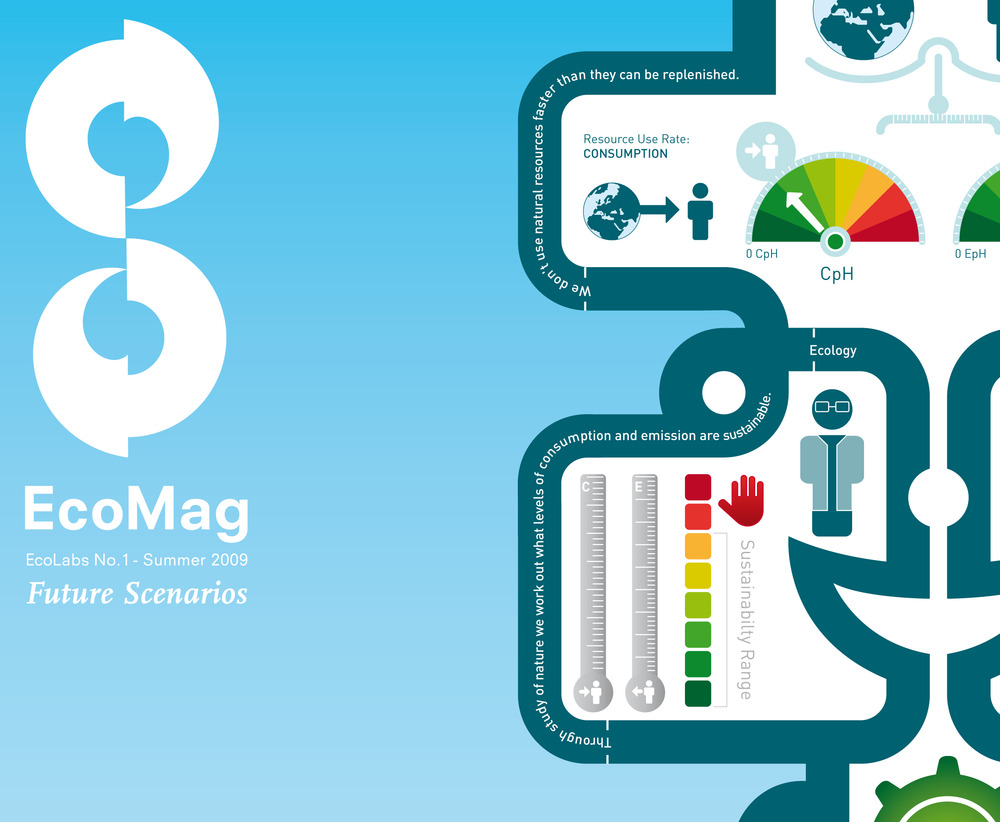
The first issue of EcoMag, Future Scenarios, is in boxes in my hallway. Our intention with EcoMag was to create a magazine that would help bring some discussions, ideas and information common amoungst environmentalists to wider audiences; and specifically those in the design and cultural industries in London. Unfortunately, although over the magazine pdf has been downloaded over 17,000 times on-line and the artwork is excellent (thanks to eight brilliant artists), the magazine itself did not make it financially viable to produce another issue. Our second issue was going to use the same technique of using artwork to map complex information visually. The theme of the second issue was going to create information design on the theme of ecological economics.

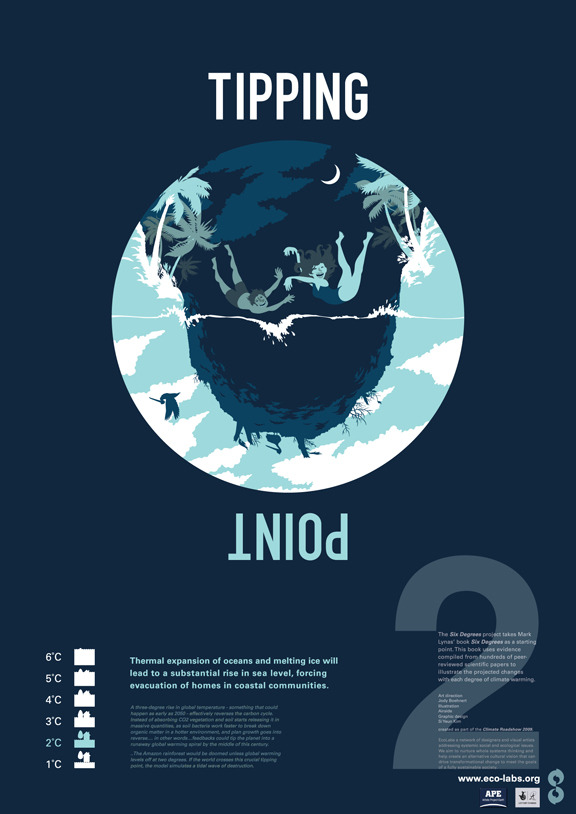

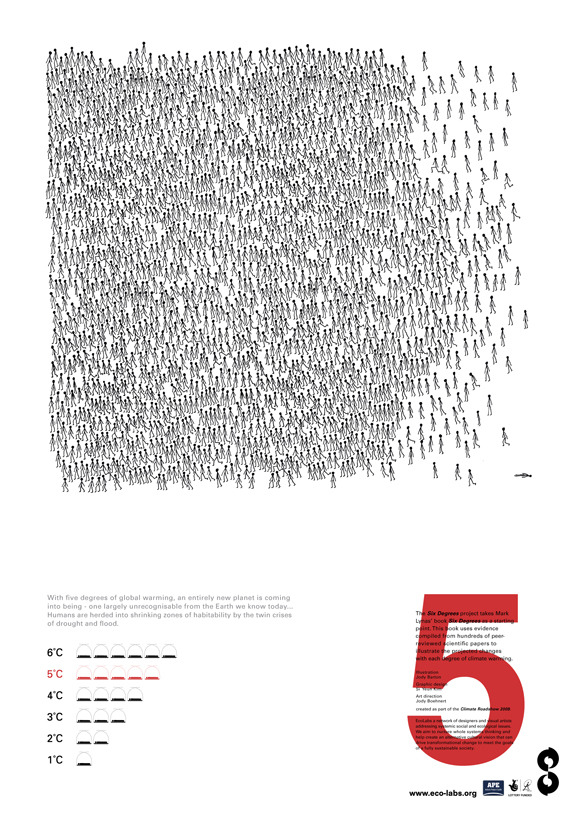
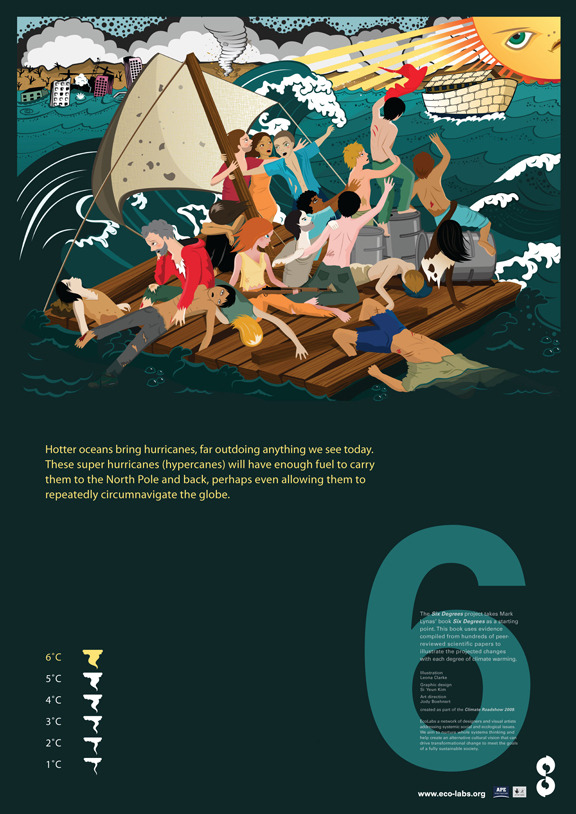
What went wrong with EcoMag? Well, EcoMag intended to reach unengaged audiences in the cultural sector. Could images convince them to become involved with the struggles to stop some of the threats depicted in the magazine? It is hard to analyze the impact of a series images. But in a culture that only values financially lucrative projects, EcoMag was an oddity and failed to find the support it needed. Yesterday a prominent designer interested in ‘sustainability’ explained to me that designers are now getting involved with ecological issues because they now see how it can be profitable. I think this man has seriously miscalculated both the severity of the problems we face in terms of climate change, resource depletion, soil erosion, bio-diversity loss, water scarcity, fish depletion, etc. etc. and the capacity of the present system to pay people to fix these problems. More honestly, there is now a deeper recognizition of the crises, and the system had made some money avaliable for those who will make it appear like these problems are being addressed, as long as they do not question the deeper roots of the problems (thereby legitimizing the status quo).
It is still a Rich World
I lost another job today. The job, for an environmental agency communicating biodiversity, was ‘suspended’ due to slashed budgets. This kind of thing is happening all over the environmental and social sector as we start to feel the impact of austerity measures resulting from the enormous transfer of public wealth to private banks and corporations. I am not in the slightest bit convinced that we are not able to afford environmental and social programmes; yes, its true our governments are loaded with debt and the economy is in tatters, but this is still a rich country (and certain markets, such as the art market have remained buoyant). Feigning poverty to avoid collective responsiblity is a cheap trick. I do not for a second believe that we do not have the money to protect biodiversity, provide ecological education, or stop climate change – but these programmes are all being slashed. It’s not that I lost a job, but it is that some vitally important work is not being done.
 EcoLabs