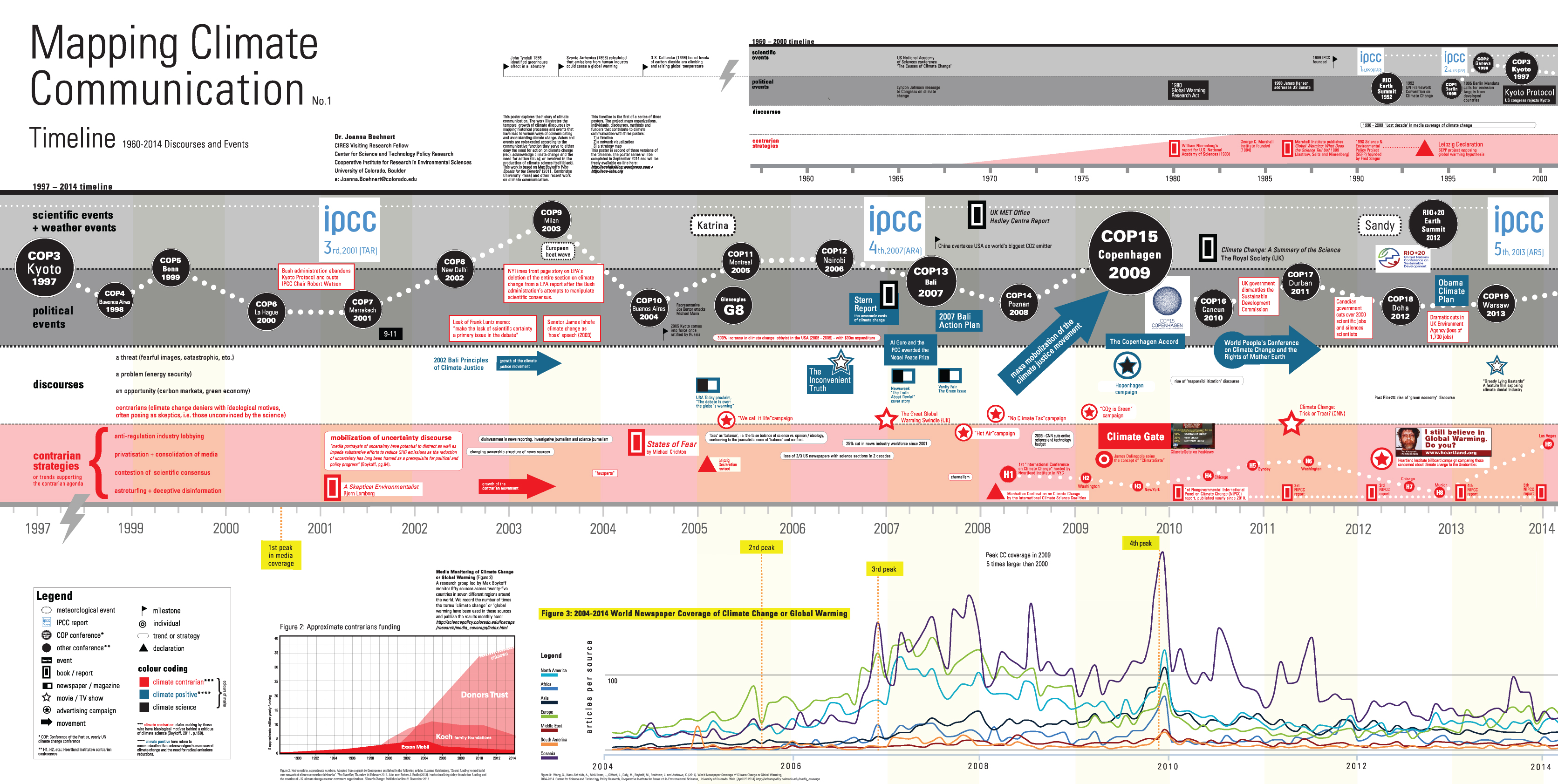
This series of three posters maps climate communication by means of a timeline, a network visualization and a strategy map. The work illustrates
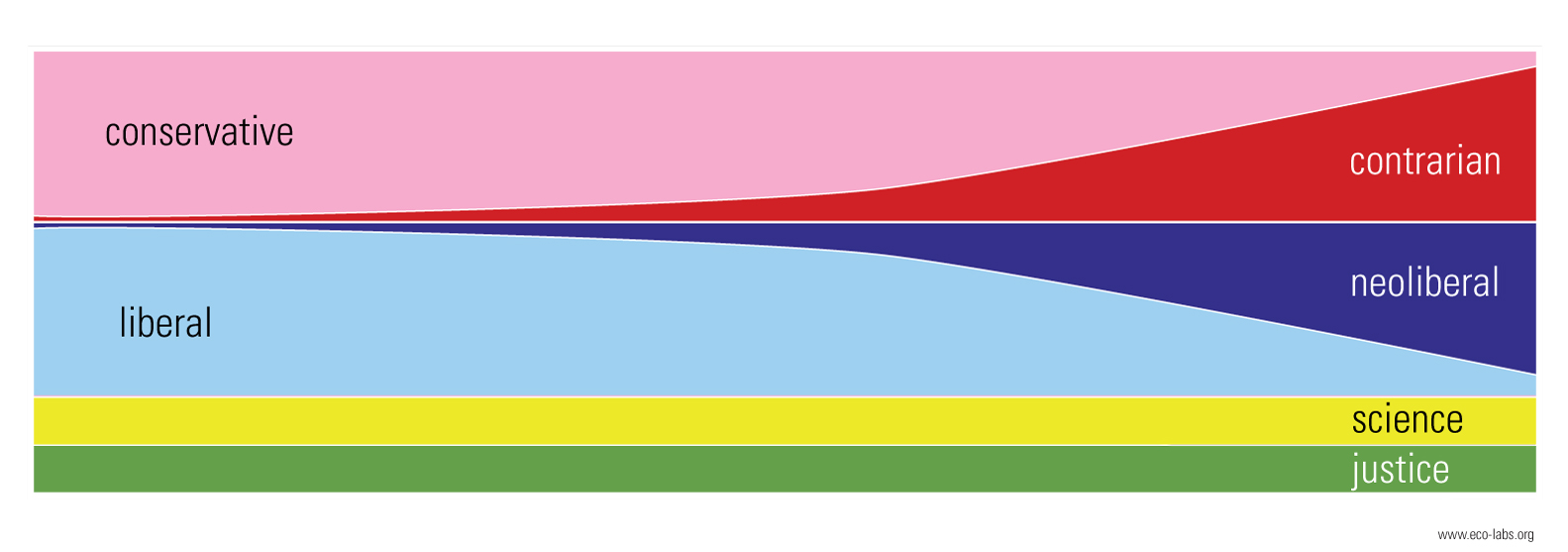
relationships between climate discourses, prominent actors and major organizations participating in climate communication including science institutions, academic institutions, media organizations, think tanks and government agencies – along with the interests and funders linked to these organizations. Various discourses are mapped including climate science; counter-movements (contrarianism); ecological modernization, neoliberalism and corporate capture; and social movements (climate justice). The timeline visualizes the historical processes that have lead to the growth of various ways of communicating climate change. The network visualization illustrates relationships between actors and prominent discourses. The strategy map displays methods used within four discursive realms.
The posters are still work in process. They will be presented at the ‘Changing Climate Communication’ conference in July 2014. Feedback from this presentation will inform a final stage of the visualizations, to be completed in September 2014.
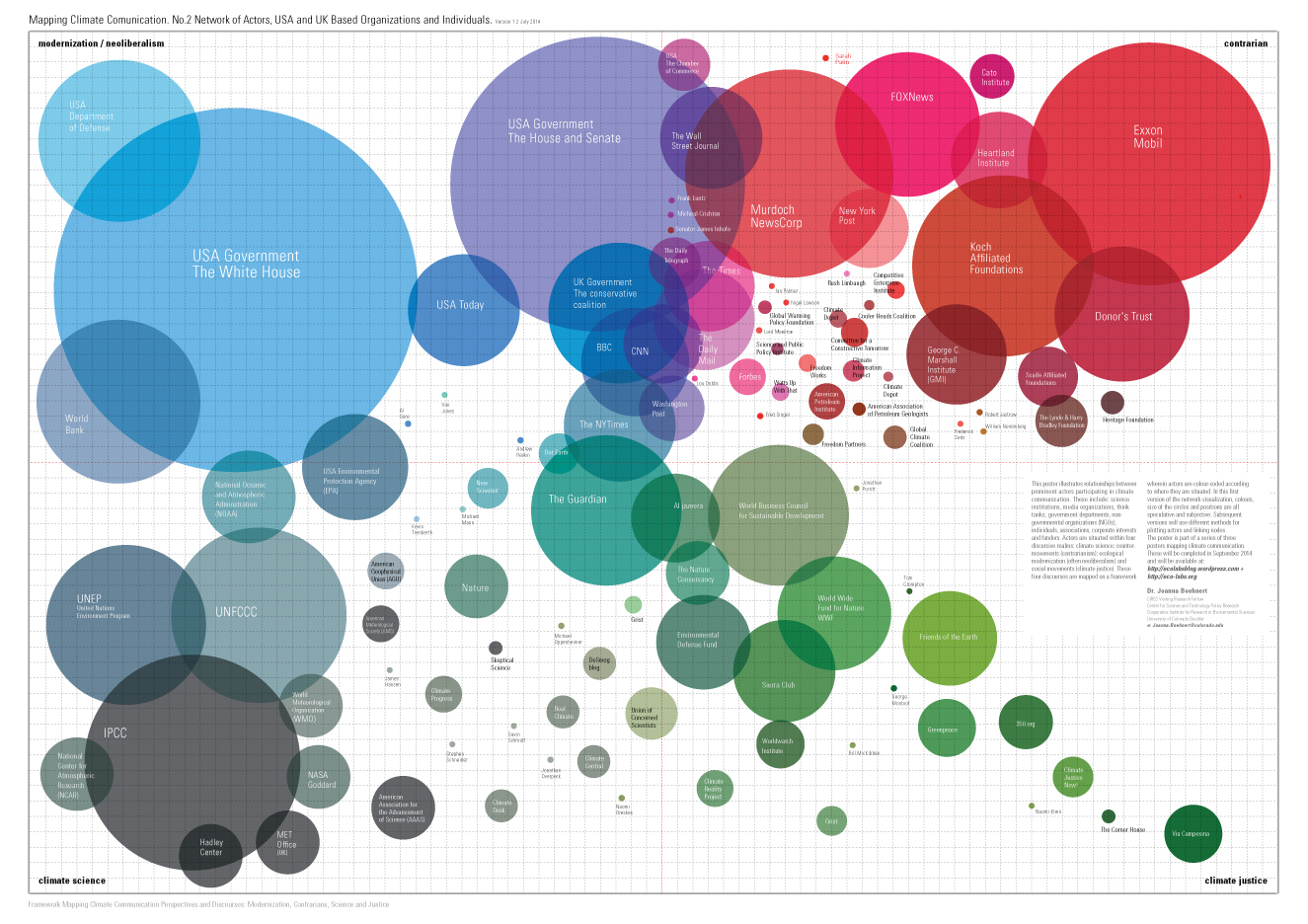
No.2 Network of Actors, USA and UK Based Organizations and Individuals. Version 1. July 2014
The poster illustrates relationships between prominent actors and major organizations participating in climate communication. These include: science institutions, media organizations, think tanks, government departments, non-governmental organization (NGOs) and individuals – along with some of the more significant funders. Actors are situated within four discursive realms: climate science; counter-movements (contrarianism); ecological modernization (often neoliberalism); and social movements (climate justice). These four discourses are mapped on a framework wherein actors are colour-coded according to where they are situated. In this first version the colour, the size of the circles and their positions are all speculative. Subsequent versions will use different methods for plotting the actors and linking the nodes.
 EcoLabs