Ecocene Design Economies

I am attending the EAD2019 this week in Dundee where I will present my paper “Ecocene Design Economies: Three Ecologies of Systems Transitions.”  I am publishing the link to this paper here.

Ecocene Design Economies: Three Ecologies of Systems Transitions

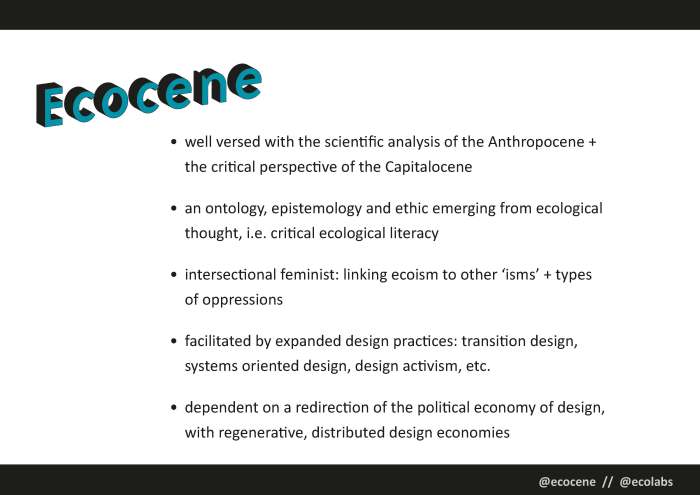
Despite accumulative social and technological innovation, the design industry continues to face significant obstacles when addressing issues of sustainability. Climate change and other systemic ecological problems demands shifts on an order of magnitude well beyond the trajectory of business-as-usual. I will argue that these complex problems require addressing the epistemological error in knowledge systems reproducing unsustainable designed worlds.

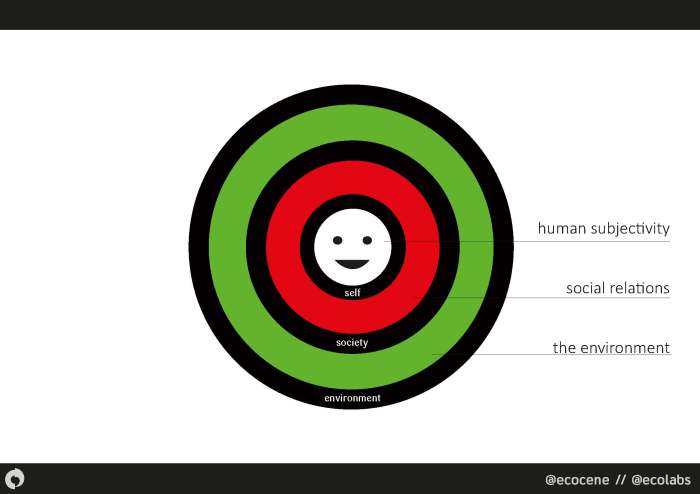
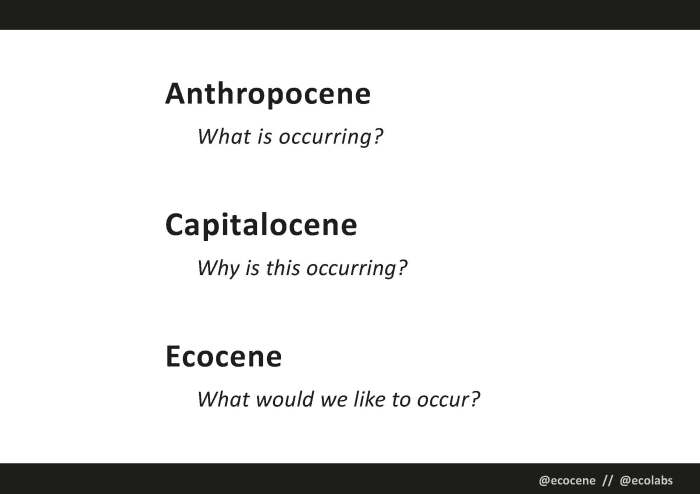
Ecological literacy is a basis for nature-inspired design. Ecologically engaged knowledge must inform design strategies across the psychological, the social and the environmental domains. With the expansive three ecologies perspective, interventions at the intersection of design and economics can enable systems transitions. This theoretical work informs a framing of the current epoch in ways that create a foundation for the creation of regenerative, distributed and redirected design economies.
Ecocene EAD2019 - Online_Page_09

Ecocene EAD2019 - Online_Page_17

Ecocene EAD2019 - Online_Page_33

Feminist Pedagogy and Strategies of Denial

Enabling Difficult Confrontations for Intergeneration Solidarity and Survival

Presentation at the “Critical Pedagogies in the Neoliberal University: Expanding the Feminist Theme in the 21st century Art [and Design] School” session, #AAH2019 –Brighton, April 2019

I will use this paper to reflect on tensions between generations of feminists with a focus on strategies of denial and their toll on the goals of feminist movements. Feminists movements have historically worked (with varying degrees of success) to end the normalisation of denial of social injustices and symbolic, structural and/or actual violence. Feminist pedagogy must intensify challenges to various manifestations of denial responsible for reproducing patriarchy, oppressive social relations and ecocide.

This paper will address denial in the face of divisive issues such as the ‘me too’ movement; the precarity faced by younger generations; and the intersections of patriarchy and ecological crises. It is based on my personal experience as a daughter of a feminist academic in Canada, as a student at art school and my current role as lecturer in design education oriented towards social and environmental justice. Solidarity and even survival depends on our ability to make confrontations with disturbing information a catalyst for change. The lessons learned from feminist struggles inform the work of confronting oppressions, including those on issues of environment justice.

https://www.slideshare.net/ecolabs/slideshelf

My experiences have led me to the conclusion that many, if not most, oppressive behaviours and attitudes are rooted in various types of denial and unconscious bias. Both are deep seated forces that prevent many of us (and especially those with more privilege) from seeing things that disturb our self-image. Feminist strategies such as transformative learning help us negotiate these difficult confrontations. These are needed now more than ever in higher education and beyond. Unfortunately, neoliberal modes of governance all but destroy opportunities for transformative learning.

https://www.slideshare.net/ecolabs/slideshelf