Design vs the Design Industry

I have just finished a new paper for the Studies in Emergent Order journal. I found the framework of emergence helpful in describing problems with design and ecological crisis. I am looking forward making the paper public, but for the moment all I can post is this abstract.

Design as an Emergent Order and ‘Tensions’ with the Market

As the professional practice of creating new products, buildings, services, infrastructure and communication, design manifests the creative vision of individual designers for solutions to meet human needs and desires. Design is an emergent order that evolves as the skills and capacities of designers change with new technology and communications practices. New cognitive and perceptual capacities enable a greater understanding of complexity, context and system dynamics creating the potential better solutions to contemporary problems. Yet despite emergent skills, designers are not able to effectively address contemporary problems due to ‘tensions’ with the emergent order of the market. Critically, ‘design’ is not the same as the ‘design industry’. This paper will describe design as an emergent order with a specific focus on communication design and the profound conflicts between this order and the market. This conflict results in distortions of knowledge and reason with severe consequences.

** I am using the word ‘tensions’ because this is the word used in the call for papers. In the context of my paper it is an extreme understatement.
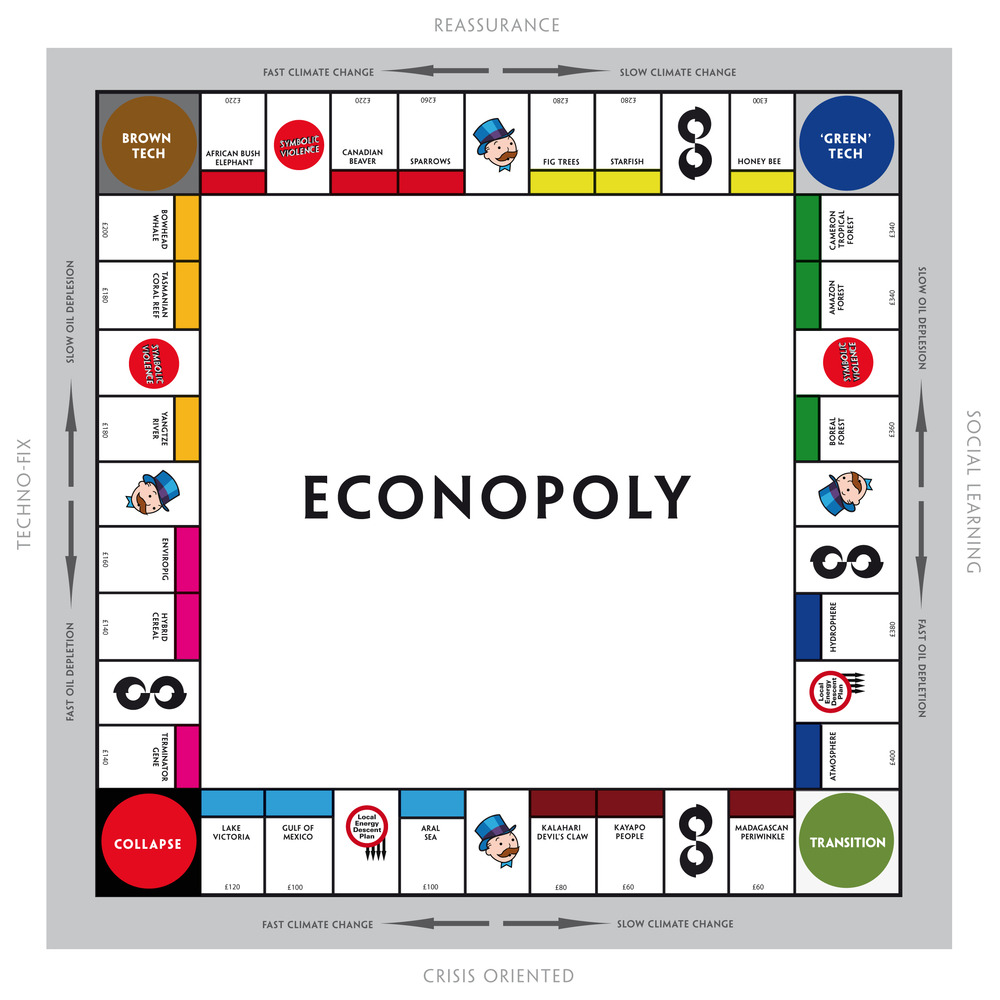
Econopoly: On Ecosystems and Economics

Econopoly: Phase One of Ecology Games 2012

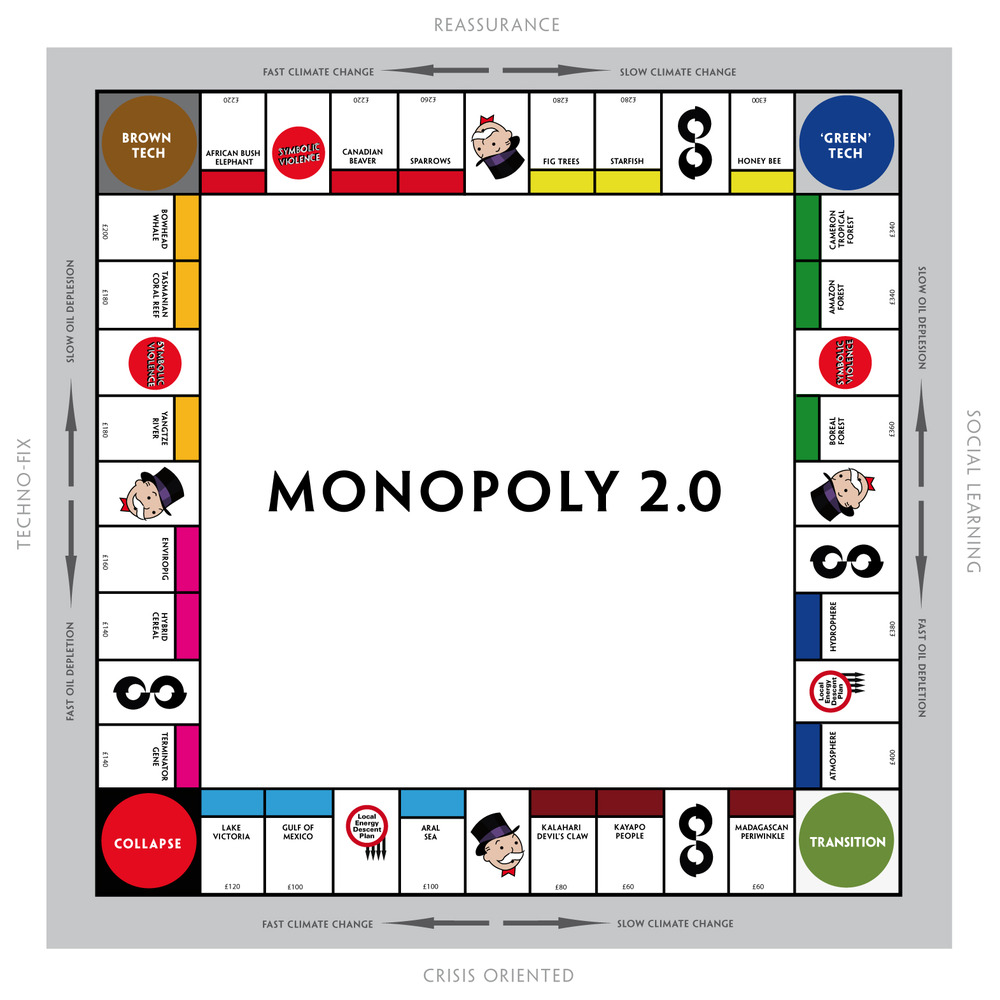
The original game of Monopoly was invented by a Quaker woman called Elizabeth Magie in 1903 (and originally called The Landlord’s Game). Elizabeth Magie’s game intended to demonstrate the injustices of Henry George’s Single Tax on land but instead Parker Brothers bought the rights and made a game about buying property, making monopolies and beating other players by charging them rent.

Econopoly is about the commodification of the natural world. Presently, ecological ‘services’ are being given financial value in a desperate effort to convince industrialists to acknowledge the importance of Nature. The financialisation of ‘ecosystem services’ is based on the belief this will help protect biodiversity. But does assigning ecosystems an economic value really work?

Consider the recent The Economics of Ecosystems and Biodiversity (TEEB) report, which estimates a total economic value of insect pollination worldwide at €153 billion (Gallai et al. 2009 in TEEB, 2010: p.8). It’s a high number, but does this number actually reflect the value of pollinating insects? Considering that we are dependent on functioning ecological systems, surely these ‘ecosystem services’ and the pollinating insects which are a vital part of these ecosystems are in fact priceless. Continue reading

Eco-Labs.org v. Ecolab.com – Sanity prevails………. We win!

We have just received the good news that the www.Eco-Labs.org vs. www.ecolab.com case at the National Arbitration Forum has been decided in our favour. Ten pages of legal case work conclude with the statement: ‘Accordingly, it is ordered that the <eco-labs.org> domain name has to REMAIN WITH Respondent.’  In light of this decision, we expect that Ecolab.com (the $5bn chemical cleaning and pest extermination company) will stop harassing us. We have more important matters to address than legal battles over our name. I am grateful to the dozens of people who contributed to the the funding appeal to help pay the lawyer’s bill. Thanks to Jim Killock at the Open Rights Group for convincing me that people would care and it was possible to ask for help. Continue reading

Socially Responsive Communication at Memefest

Sl385534

 Having just spent a week working at Memefest Festival of Radical Communications on mapping socially responsive communications, I had the opportunity to reflect on what it means to make communications that address societal problems. Oliver Vodeb described seven characteristics of socially responsive communications as a starting point from which the group assembled to build on the theory by creating new maps. While intrigued by Vodeb’s work and appreciating its relevance I believe that something is missing.

Socially responsive communications must also address ecological problems because we are all ultimately completely dependent on the wellbeing of the ecological system for social wellbeing. The consequences of ecological degradation are more keenly felt by the poor and the least politically powerful so the environment is also about social justice. Powerful forces have a vested interest in representations of the nature as ‘resources’ available for industrial exploitation and actively work to suppress communications that challenge this orthodoxy. As the impact of ecological problems increasingly drives social problems, representations of the environment is a primary site of struggle. Continue reading

The Issue of 100% Male Conference Panels

Tony_presenting

I was the woman who asked the exclusively male panel at Memefest’s Festival of Radical Communications ‘Inspiration day‘ why there were no women presenters. I think it’s worth unpacking this topic a little with the  intention of helping Memefest develop into an network with strong input from women and other marginalised voices. Diversity of representation should by now be standard practice in any international  network, but is especially critical for one that aspires to represent a radical tradition.

Continue reading

EcoLabs under Threat: Corporate Encroachment of ‘eco’ and ‘labs’

Logo-onwhile

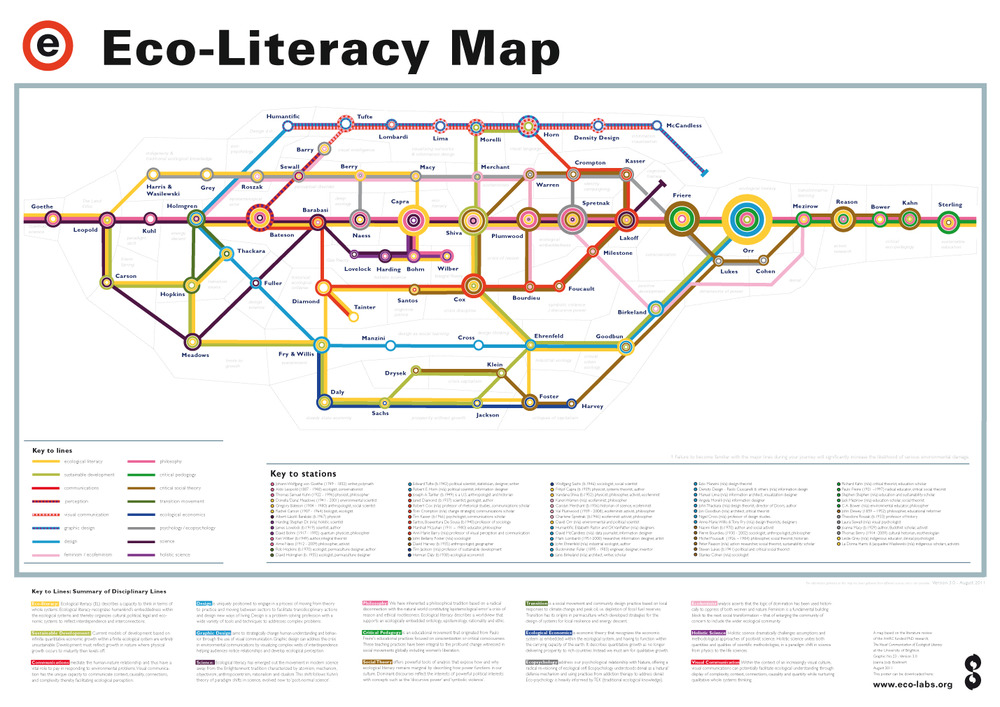
EcoLabs is a small non-profit environmental education organisation based in London. We are engaged in research, design and visual communication of complex ideas and ecological literacy. We have been doing this work under the name EcoLabs – the ecological literacy initiative since 2006. We publish all our award-winning designs work for free on-line (thousands of visual resources have been downloaded on our website – www.eco-labs.org).

Meanwhile, a corporation called Ecolab is a 60 year old multi-national with a turn-over of over $6bn/year. They sell sanitation, food safety and pest extermination products and services. Last year Ecolab sent us (and our Internet provider) a series of threatening letters. We took legal council and our lawyer argued that Eco-Labs.org is entitled to use the words ‘eco’ and ‘labs’ in this context. Last week we received notice that Ecolab.com are again attempting to force EcoLabs to change our domain name. The case will be overseen by National Arbitration Forum  in Minneapolis at the end of May.

The prefix ‘ECO‘ is in common usage, being shorthand for the term ‘ecological’. The term ‘LABS‘ refers to the research and development conducted as part of our communication design practice. Both words are so common that it is absurd for a corporate entity to assume the legal right to prevent others from combining these two ideas together. Language is a commons resource freely available to us all to reinvent and modify as we evolve. It sets a problematic precedent to allow corporations to define what can be called ‘eco’ or ‘labs’. Continue reading

Lessons from Feminism for Environmental Education

Img_5408

Endeavors to create conditions that will develop an awareness of context, political consciousness and the potential for social action have a long history in adult education. The remarkable shifts in women’s rights in the late twentieth century were the results of over a century’s worth of struggle by feminists, a struggle that became institutionalised in universities in the 1970s with the emergence of women’s studies. This radical education transformed the daily lives and political realities of thousands of women. 

In a 1975 American nation-wide study of women’s education Jack Mezirow identified ten phases often encountered during consciousness-raising process within women’s education and developed the theory and practice of transformative learning. Transformative learning has now been developed into a practice that helps learners critically examine assumptions and as well as develop social capacities to put new perspectives into practice. This practice is a powerful tool with the potential to help learners cross the infamous value / action gap in environmental education. I recently presented a slideshow on transformative learning at the Design Research Society’s SkinDeep 2011 conference on experiential knowledge and multi-sensory communication. Continue reading

Resistance to the Cuts: What Next? Part Two – On Big Society and People’s Assemblies

Img_1015

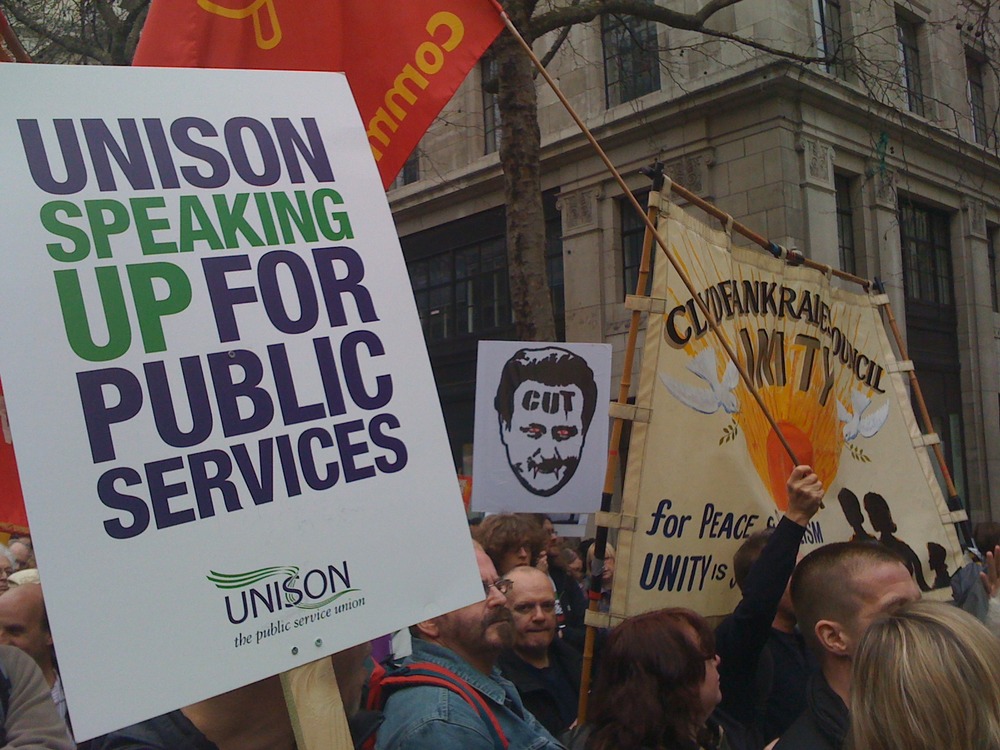
Two friends have both written excellent blogs on propositional not just oppositional strategies. These suggest not just dissent and resistance to political processes that are fundamentally broken – but the creation of new processes that could feasibly help us build something more equitable and sustainable.

Continue reading

Resistance to the Cuts: What Next? Part One

Dscf7843

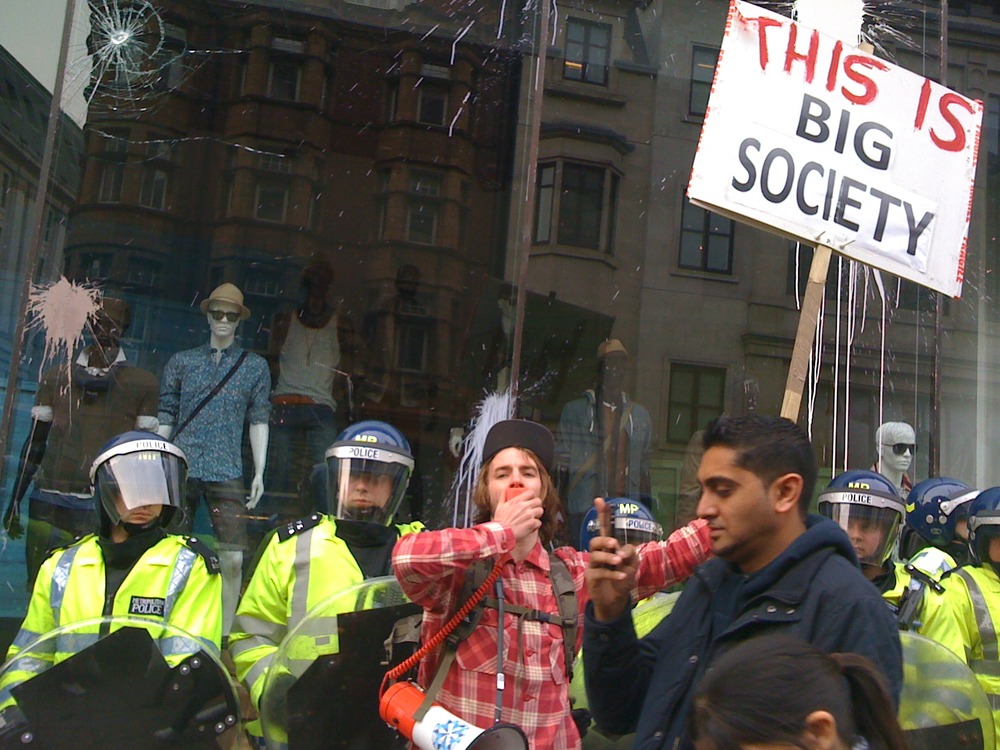
In one turbulent week since the March 26th movements are consolidating and ideas and plans are emerging. There has been indignation about broken windows and violence in the press and while some have pointed out that the clash between tactics is neither new nor exclusive to the left, movements such as Ukuncut have shown ‘tactical respect’ and gracefully refused to condemn the actions of other protesters on the streets.

Today an article claimed that the dramatic drop in Tory popularity in polls this week demonstrates that big protests do make a difference in political opinion. Yet the real difference a gathering of half a million people makes is deeper than the opinion polls; the debate created by this demonstration is part of a broader social learning process that will inform an ongoing organizing process. 

Continue reading

Just the Beginning: Resistance to the Cuts #26March

Img_1005

Estimates of a half million people on the streets yesterday. The 26th of March was a great success but only the beginning if we hope to stop the destruction of decades worth of social progress, save education, social services and the NHS. Several hundred thousand are willing to stand up for what they believe and because of them today there is just a little more hope that our resistance to austerity measures will work. Continue reading

Mapping Environmental Discourses

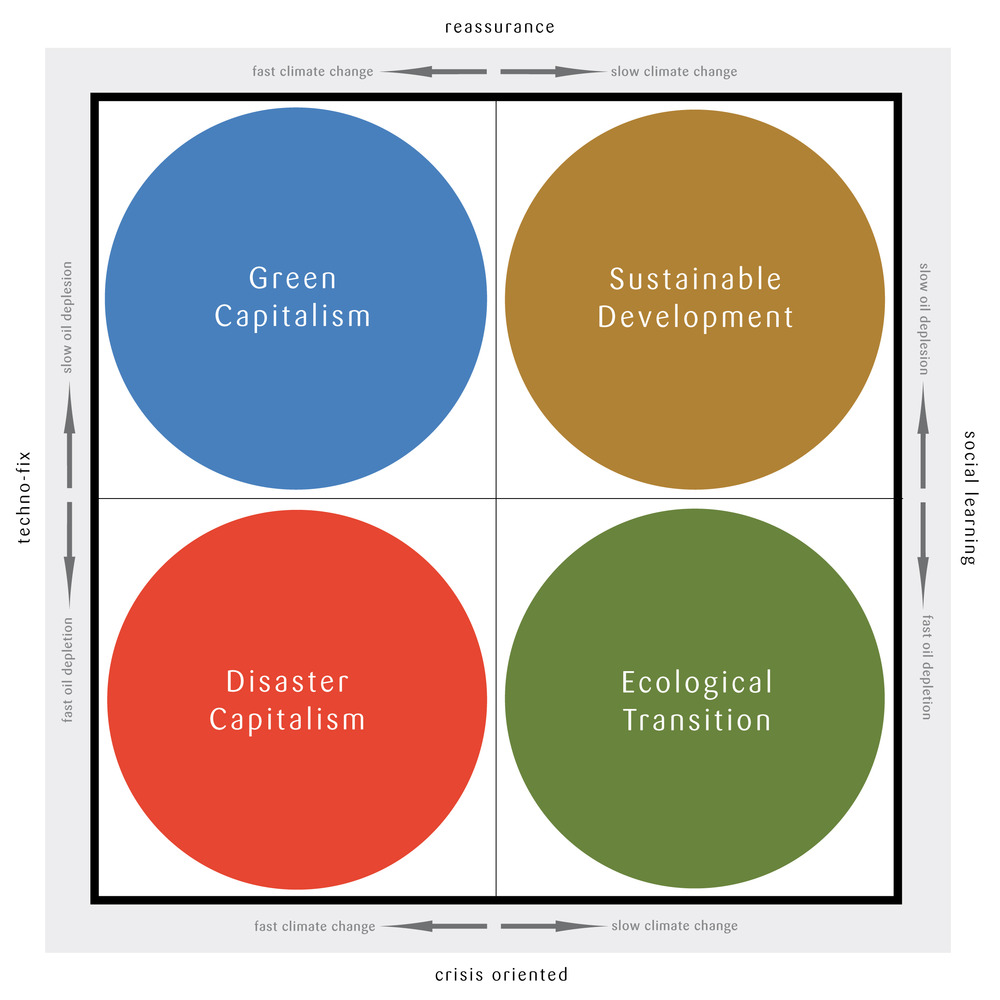
Having just finished writing a sub-chapter of my PhD I decided that a new model was needed to address certain problems. I am not going to publish the whole discussion yet. This new diagram attempts to reflect power dynamics and ideological positions of dominant environmental discourses.

The model is premised on the idea that discourses that suit business interests are legitimized at the expense of discourses that more profoundly problematise current industrial practices. To a large extent, the market determines what information is publicly available because communications either take the form of marketing and/or are produced by industries that are dependent on advertising. Discursive discipline marginalizes critical positions. Furthermore, discourses are not always made explicit; vested interests will mask their intentions to influence policy that works in their favour. The green capitalism discourse is hegemonic but as crises continue to accelerate, a more coersive type of ‘disaster capitalism’ emerges (Klein, 2008).

Continue reading

‘London Futures’ and a History of Social Change in London

London Futures by Robert Graves and Didier  Madoc-Jones.  London Futures

I visited the Museum of London today to visit London Futures, an exhibition about climate change by Robert Graves and Didier Madoc-Jones. The highly sanitized version of London landscapes altered by dramatic climate change were picturesque and entertaining but also had an unfortunate tendency to make apocalyptic futures look glamorous.

Continue reading

Decoding Visual Media: Representations of Nature in Popular Culture

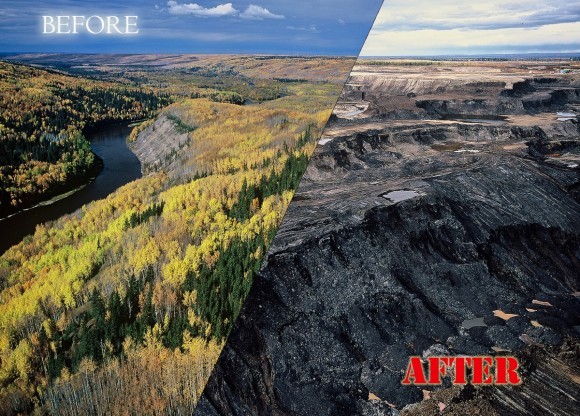
I am interested in how representations of Nature in the media and popular culture effect our attitudes towards Nature. I would like to study this phenomenon and could use some help from you, yes you reader. I need more examples. I am going to try and crowd source visual samples. Please help me out by visiting this new blog. Read the brief descriptions of the main themes under investigation. Think about it a bit and if you come up with some samples that reflect the themes, please send them in or let me know. I hope to make it worth your while in the end by writing something useful. Many thanks.

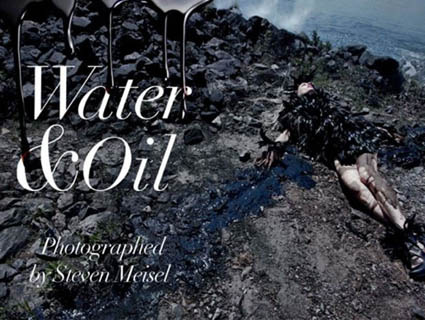
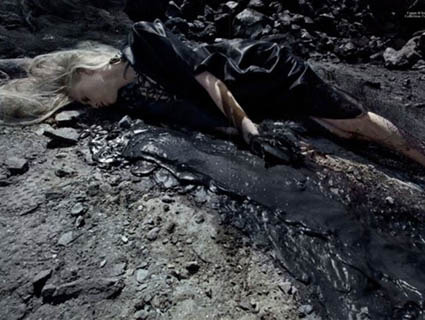
Above: Oil and Water – photoshot by Vogue summer 2010 on the theme of the Gulp Oil spill.

Narcissism normalised

No

Recently a NYTimes article announced that narcissism is being deleted from the tomb for psychiatric disorders. Narcissism will not appear in the fifth edition of the Diagnostic and Statistical Manual of Mental Disorders (due out in 2013, and known as DSM-5). What happens when what was once morally objectionable behaviour ( egotism, vanity, conceit, selfishness) is no longer a ‘legitimate’ social deviance? Is narcissism now so deeply embedded in the collective psyche that it is now ‘normal’? Is this the ultimate end of the neo-liberal exhalation of the individual, celebrity culture, a century’s worth of advertising and the corporatisation of everyday life?

Continue reading